


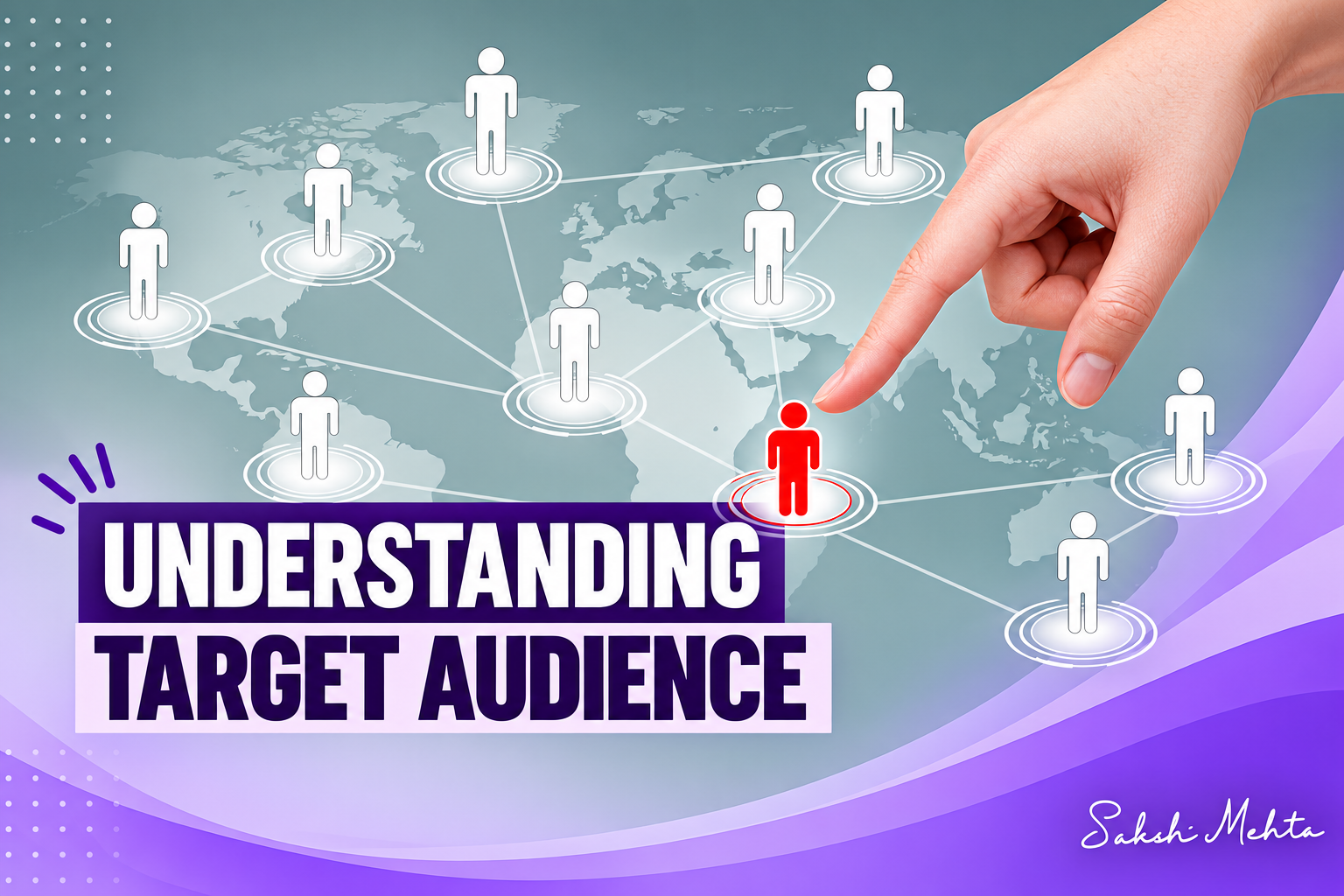
Most content does not fail because it’s badly written. It fails because no one knows, specifically, who it’s for.
You’ve probably felt this. You publish consistently. You follow the SEO checklist. You post on every platform you’re supposed to. And the engagement still doesn’t move. A client eventually asks if any of it is working, and you don’t have a confident answer.
The problem usually isn’t effort or skill. It’s that the content was written for “everyone,” which in practice means it was written for no one. Vague content gets read by nobody in particular and remembered by nobody at all.
This is fixable, and it doesn’t need a bigger budget or a complete content overhaul. It needs a clear answer to one question: who exactly is this for?
This guide walks you through that. You’ll learn the types of target audiences, how to research yours without expensive tools, and how to turn that research into content that actually gets read, trusted, and acted on. Real cases are included, so you can see what this looks like in practice.
Let’s find out who you’re actually writing for.
Why Your Target Audience Matters More Than Your Craft?
A good creative, a copy, or an article can still be forgettable.
I wrote many pieces that ticked every box: research, structure, and SEO optimization, you name it.
Some of them went nowhere. And the problem? I had written for a blurry “everyone.”
Target audience research is not a new idea. It sits inside long-established marketing fields like market segmentation, consumer behavior, positioning, and personalization. The American Marketing Association notes that segmentation has been used for decades, based on customer needs, attitudes, behaviors, geography, and demographics.
So this is not a trend. It is foundational.
One important caution before we start. Effective targeting is not just picking an age group. A useful segment needs three things: A shared need or outcome, reachability, and enough size or value to be worth serving.
It also has to be handled ethically, without stereotyping, unfair exclusion, or misuse of personal data.

What Exactly Is a Target Audience?
A target audience is the specific group most likely to need, want, or benefit from what a brand offers. It is not everyone who could theoretically buy. That is a market, and a target audience is narrower.
You will also hear the term buyer persona. Think of it as a semi-fictional profile of your ideal customer. It includes a name, a job, goals, objections, and the platforms they actually use. The audience is the group. The persona gives them a face.
Step 1: Learn the Types of Target Audiences
Before you can pick yours, you need to know how audiences get sliced. These are the main types of target audiences.:
I. Demographic audiences are the most obvious starting point: age, gender, income, education, occupation, family status. Most people begin here, and for good reason. It’s easy to define and measure. But two people can match every demographic box and still want completely different things from the same product. That makes it a starting point, not a strategy.
II. That gap is exactly what psychographic audiences fill. These look at values, lifestyle, attitudes, and aspirations- the why behind the buy. Let us consider a jewellery brand, as that’s where this difference matters most. Two women, same age, similar income, but one is buying something she’ll wear to work. The other woman is buying an heirloom for her daughter’s wedding. Demographically, they’re identical. Emotionally, they need completely different messaging.
III. Where someone lives changes things too. Geographic audiences account for city versus small town, regional language, and local festivals. In real estate, this isn’t optional. A Gurgaon buyer wants to know about connectivity to Delhi. A Pune buyer is thinking about IT hub access and daily traffic. Same category of buyer, different questions, because location shapes what actually matters to them.
IV. Then there’s what people actually do, which often matters more than who they are. Behavioral audiences are grouped by purchase frequency, loyalty, engagement, and buying stage. Someone who’s spent three weeks comparing appliance specs is close to a decision and wants detailed comparisons. Someone who just landed on the page for the first time needs something far simpler. Same product, but where they are in the journey changes what they need from you.
V. If your organization runs with a B2B setup, there’s one more layer. Firmographic audiences are defined by company size, industry, revenue, and decision-maker role. This was the biggest adjustment for me when I moved into B2B and professional services.
Remember you’re not writing for a business but for a specific person whose job is on the line if they get the choice wrong. Often, it is one to two or three other people with different concerns before anything gets approved.
You can also rank audiences by priority.
- The primary audience is most likely to buy.
- Secondary audience influences or occasionally buys.
- Tertiary audience sits on the fringe for now.
Step 2: Narrow Until the Target Audience Gets Specific
Here is the test I use. If your audience description could tell about half the country, keep going.
Take real estate, for example. “People who want homes” is far too broad. It tells you nothing about what to write.
A stronger segment looks like this. Remote working families relocating to a planned community, who care about schools, amenities, travel time, and resale value.
Now compare that to three other real estate segments: investors, retirees, and luxury second-home buyers.
Each of them needs different content. The investor wants rental yield and appreciation data. The retiree wants healthcare access and single-floor layouts. The relocating family wants school ratings and internet reliability. It’s the same product category but four different content plans.
Try this with your own brand. Write your current audience description. Then split it into at least three subgroups. Ask what each one would need to read before they trusted you.
Step 3: Research Your Target Audience Without a Big Budget
You do not need research spend. You need curiosity and discipline.
Talk to real people. Customer calls, DMs, honest conversations- ask what they struggled with before they found the brand. This might not always appear to be a possible solution, but whenever you get the chance, let your clients help you with these.
Read your analytics. Google Analytics, Search Console, Instagram Insights, LinkedIn analytics- the search queries are a goldmine. That is people typing their problem in their own words.
Listen socially. This includes comments, Reddit, Quora, or review sections. People say the quiet part out loud there. Some of my best real estate content came from forum complaints.
Audit competitors. Who are they speaking to? More useful: who are they ignoring? That gap is usually your opening.
Ask the sales team. This is the most underrated step. Sales and support hear every objection weekly. In B2B, one conversation with a sales lead can reshape a whole content plan.
Run a small survey. Ten thoughtful responses beat zero assumptions.
Step 4: Build a Persona From What You Found
Turn your research into a profile. Include pain points, goals, objections, budget, and preferred channels.
Give the persona a name. I find it far easier to write for “Rohan, a first-time homebuyer worried about hidden costs” than for “Audience Segment B.”
Then write one sentence. “This content exists to help [person] solve [problem] so they can [outcome].” If you cannot fill those blanks, you are not ready to write yet.
Step 5: Use Your Target Audience to Grow Your Career
This is the part nobody explained to me.
Audience understanding separates people who execute tasks from those who shape direction. It is the most direct route from content writer to marketer I know.
Here is how it shows up.
You ask better questions. Not “what do you want in this blog?” but “who is reading this, and what should they do next?”
You pitch instead of waiting for briefs. This single change altered how clients treated me.
Start selling outcomes over output. Anyone can promise four blogs a month. Fewer can promise content that brings the right enquiries.
Mistakes to Avoid When Defining Your Target Audience
- Assuming instead of researching. Your gut is a hypothesis.
- Going too broad. “Anyone who wants a nice home” is not an audience.
- Going too narrow. If the group cannot sustain growth, you overcorrected.
- Treating it as one-time work. Audiences shift. Revisit every few months.
- Confusing your taste with theirs. You are rarely your own audience.
- Ignoring ethics. Avoid stereotyping, unfair exclusion, and careless use of personal data. It is a reputational risk and increasingly a legal one.
Your 30 Minute Target Audience Exercise
Before we call it a wrap, I have a little exercise for you. Answer these five questions. Write them down.
- Who is the one person I most want to reach?
- What is their biggest frustration right now?
- Where do they spend time online?
- What would make them trust this brand?
- What do I want them to do after reading this?
Then run the narrowing test from Step 2. Split that person into three subgroups. Pick the one with the clearest need and the best reach.
That is your starting segment.
Final Thoughts
Writing, designing, and editing still matter. But a lot of the making is getting easier to automate. What is not easy to automate is understanding people.
That understanding took me from writing content to shaping strategy. It is the first thing I would tell anyone starting to invest in.
Before your next blog, pitch, or campaign, pause and ask who this is really for.
Everything else follows.
Working out your brand’s target audience? Drop a comment or get in touch. I would love to hear where you are stuck.